Saratov Medical University strengthens the system of high-tech assistance in the region
19 December 2025
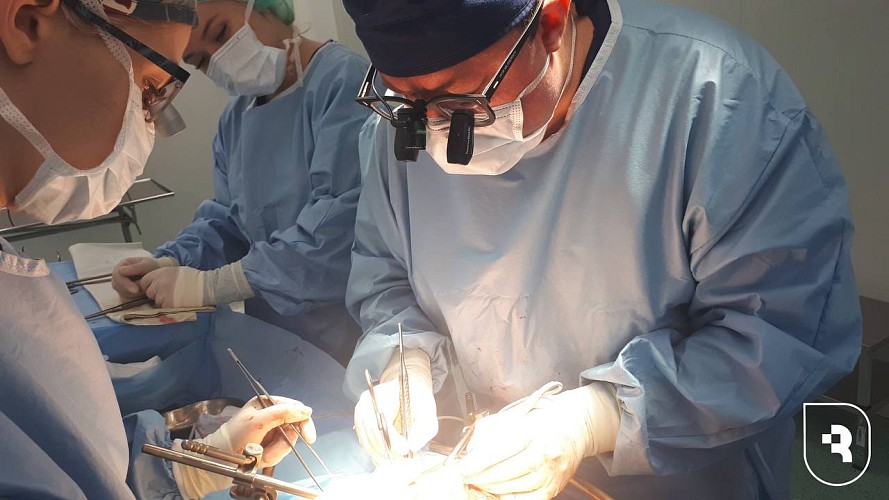
For many years, one of the most high-tech areas of modern medicine, kidney transplantation, has been actively developing at the Razumovsky State Medical University.
In the University Clinical Hospital No. 1 named after S.R. Mirotvortsev, SSMU does not carry out individual cases of organ transplantation, but a well-established cycle is successfully functioning. The clinic has been involved in this area for more than 20 years and is considered one of the key institutions in the region.
Anton Rossolovsky, Deputy Chief Physician for Surgery at the University Clinical Hospital No. 1 of SSMU, a surgeon specializing in these operations, notes that transplantation from a living related donor remains a priority.
"It has significant advantages, such as immediate graft function, a lower frequency of rejection crisis, a milder immunosuppression regimen, and a high survival rate," he explains. A total of 150 such operations have been performed at the clinic since 2005, 10 of them were performed on children.
Until recently, experts called the problem of compatibility by blood type a serious limitation, excluding up to 30% of potential related couples. The breakthrough was the development of ABO-incompatible transplantation technology, which requires special training in a complex desensitizing protocol using plasmapheresis and immunomodulatory drugs.
"This significantly expands the possibilities of using related donors. Since 2017, we have performed 15 such operations, and their results do not differ from the standard ones, in all cases a good long–term function of the transplanted organ was noted," emphasizes Anton Rossolovsky.
Today, the development of transplantology in the region continues to receive a powerful impetus due to the participation of Saratov Medical University in two federal projects "Development of federal medical organizations" and "Fight against oncological diseases" within the framework of the national project "Long and active Life". Due to this, the medical equipment park of the University Clinical Hospital No. 1 will be significantly re-equipped in 2025.
In the University Clinical Hospital No. 1 named after S.R. Mirotvortsev, SSMU does not carry out individual cases of organ transplantation, but a well-established cycle is successfully functioning. The clinic has been involved in this area for more than 20 years and is considered one of the key institutions in the region.
Anton Rossolovsky, Deputy Chief Physician for Surgery at the University Clinical Hospital No. 1 of SSMU, a surgeon specializing in these operations, notes that transplantation from a living related donor remains a priority.
"It has significant advantages, such as immediate graft function, a lower frequency of rejection crisis, a milder immunosuppression regimen, and a high survival rate," he explains. A total of 150 such operations have been performed at the clinic since 2005, 10 of them were performed on children.
Until recently, experts called the problem of compatibility by blood type a serious limitation, excluding up to 30% of potential related couples. The breakthrough was the development of ABO-incompatible transplantation technology, which requires special training in a complex desensitizing protocol using plasmapheresis and immunomodulatory drugs.
"This significantly expands the possibilities of using related donors. Since 2017, we have performed 15 such operations, and their results do not differ from the standard ones, in all cases a good long–term function of the transplanted organ was noted," emphasizes Anton Rossolovsky.
Today, the development of transplantology in the region continues to receive a powerful impetus due to the participation of Saratov Medical University in two federal projects "Development of federal medical organizations" and "Fight against oncological diseases" within the framework of the national project "Long and active Life". Due to this, the medical equipment park of the University Clinical Hospital No. 1 will be significantly re-equipped in 2025.