Saratov Medical University expert warns about the risks of winter eye injuries
8 January 2026
The winter season is accompanied by an increase in the number of visual organ injuries related to weather conditions, outdoor activities and festive traditions. Experts of the Razumovsky State Medical University note that cold, ice, winter sports, as well as the use of pyrotechnics create a complex of threats to the eyes.
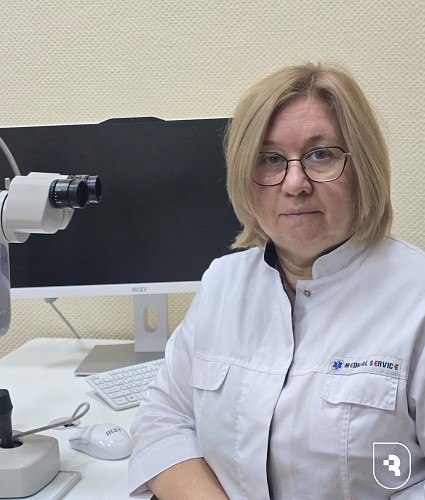
"In winter, the risk of concussion injuries (bruises of the eyeball) increases. These injuries are often combined with fractures of the bone walls of the eye socket, paranasal sinuses, jaws, and skull bones with brain damage," explains Tatiana Kamenskikh, head of the Department of Eye Diseases at Saratov Medical University.
The main subjective symptoms of eye and socket injury are pain, decreased vision, and double vision. Injuries may be accompanied by eyelid hematomas, conjunctival hemorrhages, exophthalmos (bulging of the eyeball) or, conversely, oenophthalmos (its occlusion).
The expert emphasizes that such injuries require urgent treatment at an ophthalmic trauma center. A fracture of the upper wall of the orbit is a fracture of the base of the skull, accompanied by impaired consciousness and requires emergency assistance from a neurosurgeon.
Injuries related to festive attributes represent a separate category. A flying cork from sparkling drinks can cause serious damage, including the destruction of the eyeball, so it is important to be careful and control the direction of the bottle neck.
The use of pyrotechnics is associated with a high risk of chemical and thermal burns of the eyelids and cornea, penetrating wounds with the introduction of intraocular foreign bodies, which often requires emergency ophthalmic surgery. In case of a chemical burn, it is necessary to immediately flush the eye with plenty of clean water and urgently consult an ophthalmologist.
"The winter period also provokes an exacerbation of chronic diseases, for example, herpetic keratitis caused by the herpes simplex virus. The disease is characterized by pain, photophobia, lacrimation, blepharospasm, foreign body sensation, decreased vision. Activation of the herpes virus causes a decrease in the sensitivity of the cornea and its characteristic inflammation in the form of a "tree branch", the inflammation can spread to the choroid of the eye and to the retina, this can lead to an irreversible decrease in vision. Treatment should be started immediately, in addition to ocular dosage forms, systemic therapy is also needed," says Tatiana Kamenskikh.
Prolonged exposure to the cold can lead to frostbite of the eyelids, manifested by cold and numbness, pallor of the skin, lacrimation and a tingling or burning sensation.
For prevention, doctors strongly recommend using safety glasses when exercising, being careful on slippery surfaces, following safety rules when handling pyrotechnics and opening sparkling drinks, and protecting your eyes from wind and cold. Timely referral to an ophthalmologist for any injury or alarming symptoms, including pain, redness, or decreased vision, is key to maintaining visual function and preventing it.
"In winter, the risk of concussion injuries (bruises of the eyeball) increases. These injuries are often combined with fractures of the bone walls of the eye socket, paranasal sinuses, jaws, and skull bones with brain damage," explains Tatiana Kamenskikh, head of the Department of Eye Diseases at Saratov Medical University.
The main subjective symptoms of eye and socket injury are pain, decreased vision, and double vision. Injuries may be accompanied by eyelid hematomas, conjunctival hemorrhages, exophthalmos (bulging of the eyeball) or, conversely, oenophthalmos (its occlusion).
The expert emphasizes that such injuries require urgent treatment at an ophthalmic trauma center. A fracture of the upper wall of the orbit is a fracture of the base of the skull, accompanied by impaired consciousness and requires emergency assistance from a neurosurgeon.
Injuries related to festive attributes represent a separate category. A flying cork from sparkling drinks can cause serious damage, including the destruction of the eyeball, so it is important to be careful and control the direction of the bottle neck.
The use of pyrotechnics is associated with a high risk of chemical and thermal burns of the eyelids and cornea, penetrating wounds with the introduction of intraocular foreign bodies, which often requires emergency ophthalmic surgery. In case of a chemical burn, it is necessary to immediately flush the eye with plenty of clean water and urgently consult an ophthalmologist.
"The winter period also provokes an exacerbation of chronic diseases, for example, herpetic keratitis caused by the herpes simplex virus. The disease is characterized by pain, photophobia, lacrimation, blepharospasm, foreign body sensation, decreased vision. Activation of the herpes virus causes a decrease in the sensitivity of the cornea and its characteristic inflammation in the form of a "tree branch", the inflammation can spread to the choroid of the eye and to the retina, this can lead to an irreversible decrease in vision. Treatment should be started immediately, in addition to ocular dosage forms, systemic therapy is also needed," says Tatiana Kamenskikh.
Prolonged exposure to the cold can lead to frostbite of the eyelids, manifested by cold and numbness, pallor of the skin, lacrimation and a tingling or burning sensation.
For prevention, doctors strongly recommend using safety glasses when exercising, being careful on slippery surfaces, following safety rules when handling pyrotechnics and opening sparkling drinks, and protecting your eyes from wind and cold. Timely referral to an ophthalmologist for any injury or alarming symptoms, including pain, redness, or decreased vision, is key to maintaining visual function and preventing it.