An expert from Saratov Medical University spoke about the risks and rules of swimming in the ice hole
9 January 2026
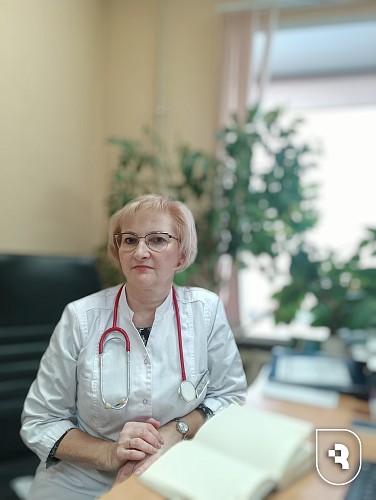
The tradition of mass bathing in ice holes, which has deep cultural and historical roots, has gained particular popularity in recent decades. However, doctors note an alarming trend: people are increasingly participating in diving without prior physical training, with a burdened medical history and, most critically, against the background of a violation of the regime typical for long New Year holidays. Natalia Nikitina, Head of the Department of Hospital Therapy at the Razumovsky State Medical University, spoke about the possible negative consequences of bathing in the ice hole and the rules of preparation.
According to her, disruption of circadian rhythms (nocturnal celebrations), overeating and alcohol consumption create an unfavorable background, turning the standard hardening procedure into a dangerous "stress" for the body.
"Water has a thermal conductivity exceeding the thermal conductivity of air by 25 times, which means that upon contact with icy water, the human body loses heat at a catastrophic rate. The body perceives this as a threat of immediate death and triggers a cascade of protective reactions, which in themselves can cause death even before the onset of true hypothermia," the expert warns.
In the context of Epiphany and New Year's bathing, which are usually short-term (dipping), the greatest danger is the development of cold shock, which can lead to aspiration of water, as well as spasm of cerebral vessels with decreased cerebral blood flow, manifested by dizziness, disorientation, and in severe cases, loss of consciousness directly in the hole.
According to the doctor, at the moment of diving, the load on the heart increases, which can be deadly for patients with heart and vascular diseases (hypertension, heart failure, myocardial infarction or myocarditis).
The expert warns that drinking alcohol "for courage" or "to keep warm" is the most common and dangerous mistake.
"Alcohol causes the expansion of skin capillaries, creating a subjective feeling of warmth ("hot wave"), but at the same time a person cools down faster. The combination of cold and alcohol leads to blood clots, which, against the background of vascular spasm, significantly increases the risk of thrombosis (heart attacks, strokes) in the first hours after bathing," says Natalia Nikitina.
It is also necessary to take into account the fact that people who do not get enough sleep have a body temperature that drops significantly faster during cooling than those who have rested. Bathing at night (especially from 3:00 a.m. to 5:00 a.m.) corresponds to the physiological minimum of body temperature, sympathetic system activity, and is an unnatural double stress.
To avoid negative consequences, the expert advises to follow simple recommendations. First of all, bathing should be done during the daytime, when circadian rhythms contribute to higher stress tolerance, and sunlight (if available) psychologically facilitates the procedure. It is extremely important to ensure a full sleep (at least 8 hours) on the eve of the dive. Swimming is allowed only in specially equipped places. The "wild" ice holes are deadly because of the current, the difficulty of getting out, and the lack of help.
In addition, it is necessary to prepare for the "Epiphany bathing" in advance - at least 2-3 months in advance.
"The task of the medical community is not to ban tradition, but to make it safe through education, shifting the focus of public attention from the "test of faith" to "responsibility for one's own health," emphasizes Natalia Nikitina.
According to her, disruption of circadian rhythms (nocturnal celebrations), overeating and alcohol consumption create an unfavorable background, turning the standard hardening procedure into a dangerous "stress" for the body.
"Water has a thermal conductivity exceeding the thermal conductivity of air by 25 times, which means that upon contact with icy water, the human body loses heat at a catastrophic rate. The body perceives this as a threat of immediate death and triggers a cascade of protective reactions, which in themselves can cause death even before the onset of true hypothermia," the expert warns.
In the context of Epiphany and New Year's bathing, which are usually short-term (dipping), the greatest danger is the development of cold shock, which can lead to aspiration of water, as well as spasm of cerebral vessels with decreased cerebral blood flow, manifested by dizziness, disorientation, and in severe cases, loss of consciousness directly in the hole.
According to the doctor, at the moment of diving, the load on the heart increases, which can be deadly for patients with heart and vascular diseases (hypertension, heart failure, myocardial infarction or myocarditis).
The expert warns that drinking alcohol "for courage" or "to keep warm" is the most common and dangerous mistake.
"Alcohol causes the expansion of skin capillaries, creating a subjective feeling of warmth ("hot wave"), but at the same time a person cools down faster. The combination of cold and alcohol leads to blood clots, which, against the background of vascular spasm, significantly increases the risk of thrombosis (heart attacks, strokes) in the first hours after bathing," says Natalia Nikitina.
It is also necessary to take into account the fact that people who do not get enough sleep have a body temperature that drops significantly faster during cooling than those who have rested. Bathing at night (especially from 3:00 a.m. to 5:00 a.m.) corresponds to the physiological minimum of body temperature, sympathetic system activity, and is an unnatural double stress.
To avoid negative consequences, the expert advises to follow simple recommendations. First of all, bathing should be done during the daytime, when circadian rhythms contribute to higher stress tolerance, and sunlight (if available) psychologically facilitates the procedure. It is extremely important to ensure a full sleep (at least 8 hours) on the eve of the dive. Swimming is allowed only in specially equipped places. The "wild" ice holes are deadly because of the current, the difficulty of getting out, and the lack of help.
In addition, it is necessary to prepare for the "Epiphany bathing" in advance - at least 2-3 months in advance.
"The task of the medical community is not to ban tradition, but to make it safe through education, shifting the focus of public attention from the "test of faith" to "responsibility for one's own health," emphasizes Natalia Nikitina.